

Driving in Rhodes is an excellent way to connect beaches, villages, archaeological sites and the island’s quieter south at your own pace. The main routes are manageable for most confident drivers, but summer traffic, scooters, buses, narrow village streets and rapidly changing road conditions reward a calm, defensive approach.
Quick answer: Drive on the right, wear seat belts in every fitted seat, keep the phone out of your hands and follow the posted speed limit for each section. Use the east-coast road for the most direct access to Faliraki, Kolymbia and Lindos; choose the west coast for a slower scenic drive toward Ancient Kamiros and Monolithos. Never follow a map app onto a restricted lane or unsuitable unpaved track.
Driving in Rhodes: interactive road map
How to use this map: Zoom in to inspect the real road network, settlements and destination approaches before driving. Google Maps can assist with planning, but current road signs, closures and official instructions always take priority.
Open Rhodes Road Map in Google Maps
Driving in Rhodes: essential facts
| Question | Practical answer |
|---|---|
| Which side of the road? | Drive on the right and overtake on the left only when it is legal and clearly safe. |
| Are seat belts required? | Use seat belts in every fitted seat and an approved child restraint appropriate to the child. |
| Can I use a phone? | Do not hold or operate a mobile phone while driving. Set navigation before moving. |
| What speed limit applies? | The current posted sign for the road section. Limits can change near settlements, junctions and roadworks. |
| Are all roads suitable for rentals? | No. Avoid restricted, unsuitable or unpaved routes and follow the conditions in your rental agreement. |
| Emergency number | Call 112 for an emergency and stop only where it is safe. |
East coast or west coast?
East coast: the main route for resorts and Lindos
The east side links Rhodes Town with Faliraki, Afandou, Kolymbia, Lindos and the settlements farther south. It is usually the clearest choice for first-time visitors because many popular resorts and beaches branch from the main corridor.
Expect larger junctions in the north, resort traffic, buses and scooters. Farther south, sections become more rural and can feel narrower. Remain patient behind slower vehicles and overtake only where the road markings, visibility and traffic make it unquestionably safe.
West coast: scenery, wind and slower progress
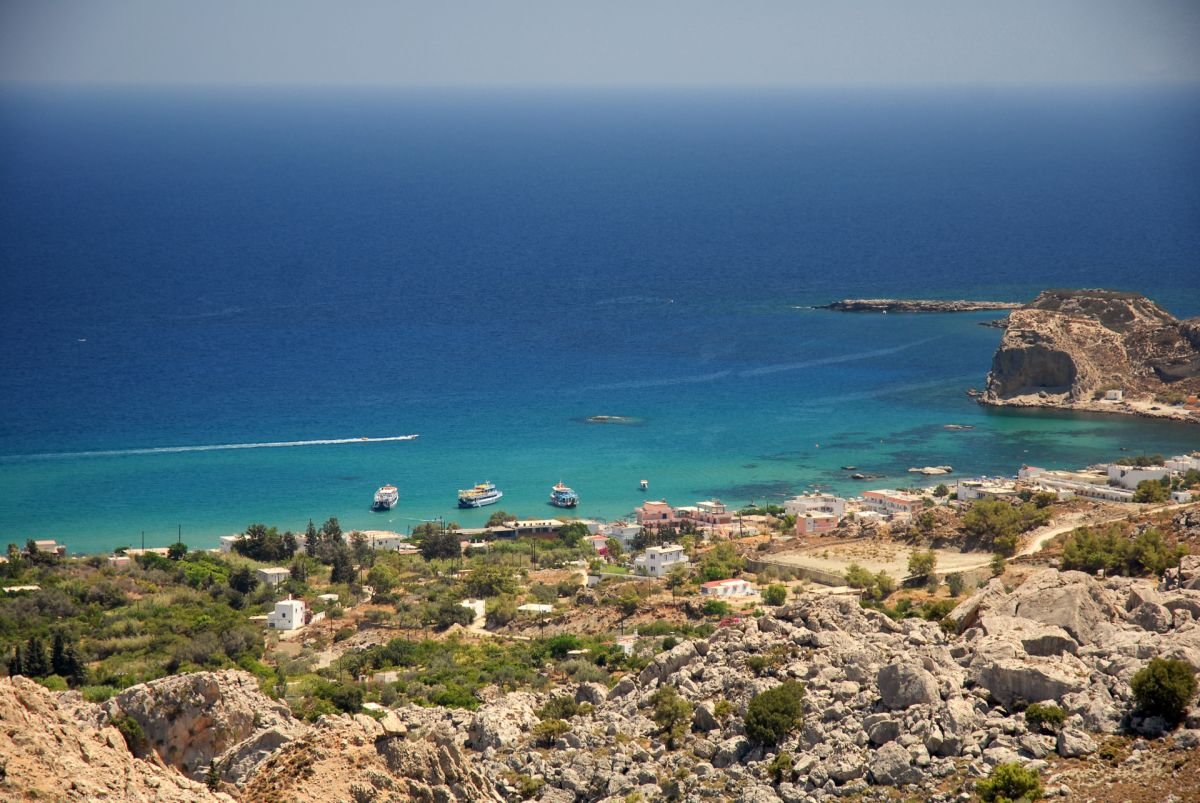
The west coast passes Ialysos and the airport before continuing toward Ancient Kamiros, Kritinia and Monolithos. It can be a memorable road trip, but distances take longer than they look because of curves, village sections and scenic stops.
Strong crosswinds are more common on exposed coastal sections. Keep both hands on the wheel, reduce speed when necessary and give cyclists and motorcycles more room. Do not stop on a bend or narrow shoulder for a photo.
South Rhodes and Prasonisi
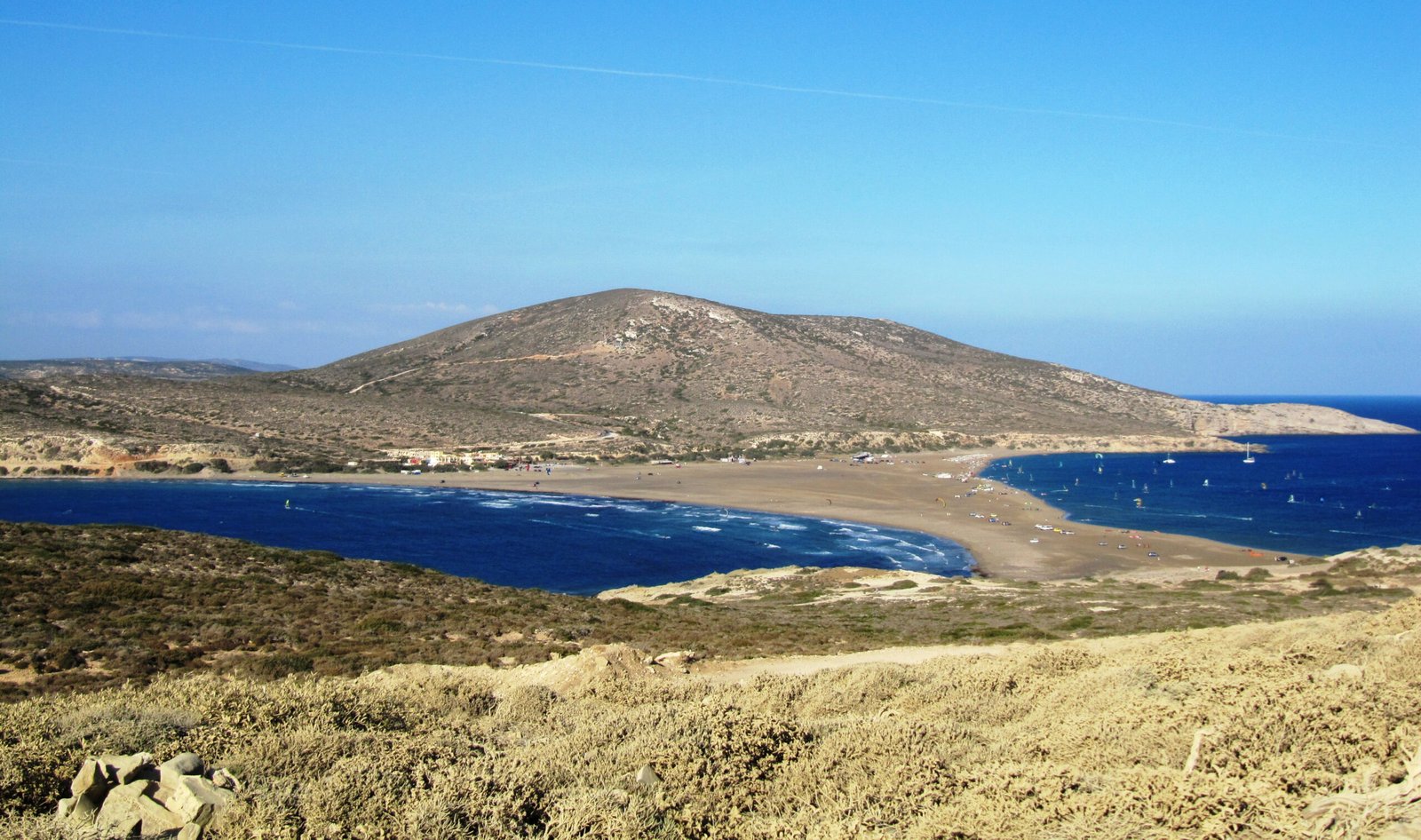
South of Lindos, the landscape opens toward Kiotari, Gennadi, Lachania and Prasonisi. Fuel, shade and services can be more spread out, so start with enough fuel and water. At Prasonisi, use recognised parking and respect signs protecting the beach and surrounding land.
Road types you will encounter
Main interurban roads
These carry the greatest volume of traffic and connect the principal destinations. Lane arrangements and speed limits can change near junctions, settlements and roadworks, so read every new sign rather than assuming one limit continues indefinitely.
Village streets
Some village streets are narrow, with parked cars, delivery vehicles and limited visibility. Enter only when access is permitted, slow down early and be prepared to yield. If the route looks unsuitable, continue to a wider legal road instead of forcing the car through.
Beach approaches
Roads to beaches can be steep, narrow or busy with pedestrians. Park only in an official or clearly permitted area. Never block a turning point, emergency access, driveway or bus route.
Mountain and forest roads
Inland routes can include tight bends, changing surfaces, rockfall debris and limited lighting. Use a lower speed before the bend, not during it. In periods of high fire risk, closures and emergency instructions can take priority over your planned route.
Unpaved tracks
A line on a navigation app is not proof that a route is suitable for a normal rental car. Unpaved beach tracks, forest access and rough shortcuts may be excluded by the rental agreement and may leave you without safe space to turn around.
Roundabouts, junctions and local traffic
Approach every roundabout and junction at a speed that gives you time to read the signs and observe other road users. Lane markings and priority arrangements can vary; do not rely on habits from your home country. Signal clearly when required and watch for a scooter beside the car before turning.
At busy resort junctions, buses may need more room to turn. Avoid sitting in a blind spot, and do not squeeze past a bus that is already manoeuvring. Pedestrians may cross near stops, hotels and beaches even where the crossing is not obvious.
Speed limits and enforcement
Use the speed displayed for the section you are driving. Greece introduced a new Road Traffic Code, and rules, penalties or local limits can change. A fixed number copied from an old travel article is less reliable than the current physical sign.
Speed cameras and police enforcement may be present. More importantly, a lower speed gives you time to react to a bus, scooter, pedestrian, animal, sudden turn or debris. Never copy a faster local driver.
Seat belts, children and mobile phones
Seat belts should be used by the driver and passengers in every fitted seat. Children need an approved restraint suitable for their size. Arrange the child seat when booking so the correct option is available at pickup.
Set the route while parked. If the destination must be changed, let a passenger do it or pull into a safe legal place. A phone mounted on the dashboard can still be distracting, so keep audio prompts simple and the screen position outside your main field of view.
Alcohol and driving
The safest rule is simple: the driver drinks no alcohol. Legal limits can differ for categories such as novice or professional drivers, and alcohol can affect judgement before a person feels impaired. Designate a sober driver or leave the car parked and use another transport option.
Parking in Rhodes
Use marked bays or a recognised parking facility and read the latest sign for charges, time limits and restrictions. Keep yellow lines, pavements, bus stops, driveways and emergency access clear. In Rhodes Town, use established parking outside the most restricted historic areas and continue on foot.
Lindos also requires planning because the central village is pedestrian or restricted. See our complete guide to where to park in Lindos.
Summer, heat and wildfire conditions
- Carry drinking water and never leave children or animals in a parked car.
- Use sunshades and allow the cabin to cool before driving.
- Do not park over dry vegetation; a hot exhaust can create a fire risk.
- Follow Civil Protection, police and fire-service instructions during an emergency.
- Never move a barrier or enter a closed road.
- Keep enough fuel for a diversion, especially in the south or inland.
Night driving in Rhodes
Lighting varies outside built-up areas. Slow down to match the distance you can see, keep the windscreen clean and use dipped headlights appropriately. Watch for pedestrians, scooters and animals near the road edge.
If you arrive on a late flight, take time to understand the car before leaving the airport. Our Rhodes Airport to Lindos by car guide includes a practical pickup checklist.
Rhodes route-planning examples
Rhodes Town to Lindos
Follow the principal east-coast direction and allow time to park outside Lindos.
East-coast beaches
Choose a small number of stops because every bay has its own approach and parking time.
Ancient Kamiros and Monolithos
Allow a generous margin on the slower west-coast route and plan to return before fatigue or darkness.
Lindos to Prasonisi
Check the weather, allow enough time for the return and keep the vehicle off sand and unapproved tracks.
Where to arrange pickup or delivery
When you are ready to choose where your journey begins, browse CARIO pickup and delivery locations. Vehicle, insurance and booking details stay on those commercial pages.
Frequently asked questions
Is driving in Rhodes easy?
The principal roads are manageable for many visitors, but summer traffic, unfamiliar junctions, scooters and narrow approaches require concentration. Prepare the route and drive defensively.
Do you drive on the left or right in Rhodes?
Drive on the right. Overtake on the left only where it is legal and safe.
Can I drive into Rhodes Old Town?
Access inside historic or restricted areas is limited. Use recognised parking outside the restricted core and continue on foot unless current signs clearly permit your vehicle.
Can I drive into Lindos village?
Normal visitors should park outside the pedestrian centre and walk. Follow current parking signs and authorised local instructions.
Are road signs in English?
Major destinations are commonly shown using Greek and Latin characters, but not every local sign will be familiar. Learn the spelling of your destination and use navigation as support.
Can I drive on dirt roads with a rental car?
Do not assume so. Coverage and road-use restrictions depend on the rental terms. Avoid unsuitable tracks and ask Cario before planning an unpaved route.
What should I do in an emergency?
Move to a safe place if possible, use hazard lights appropriately and call 112. Contact Cario for vehicle assistance as soon as it is safe.
Sources and editorial notes
- Greek Ministry of Infrastructure and Transport: New Road Traffic Code
- European Commission: seat-belt safety and requirements
- European Commission: road-safety enforcement
- Visit Greece: Rhodes
- Conditions, access and traffic arrangements can change. Current signs and official instructions always take priority.
Ready to Explore Rhodes?
Book your car online in minutes. The price and key terms are shown before you confirm – no hidden charges at collection.
Read our reviews →  ★★★★★
★★★★★